
Passion, pay and the 6/12 problem: this week in UK optics
Your weekly catch-up from Garry Kousoulou FBDO. The GOC’s sight test plans, what the Budget means for your practice, police checking drivers’ eyesight, and a brilliant conversation with Jason Searle on The Optician Show.
 ☺Director ofHappiness
Hello, and thank you for reading.
This week I sat down with Jason Searle, a passionate optometrist who started out as a dispensing optician. It’s a must-listen episode.
Grab a cuppa. Here’s what caught my eye.
New on The Optician Show: beyond the eye test with Jason Searle
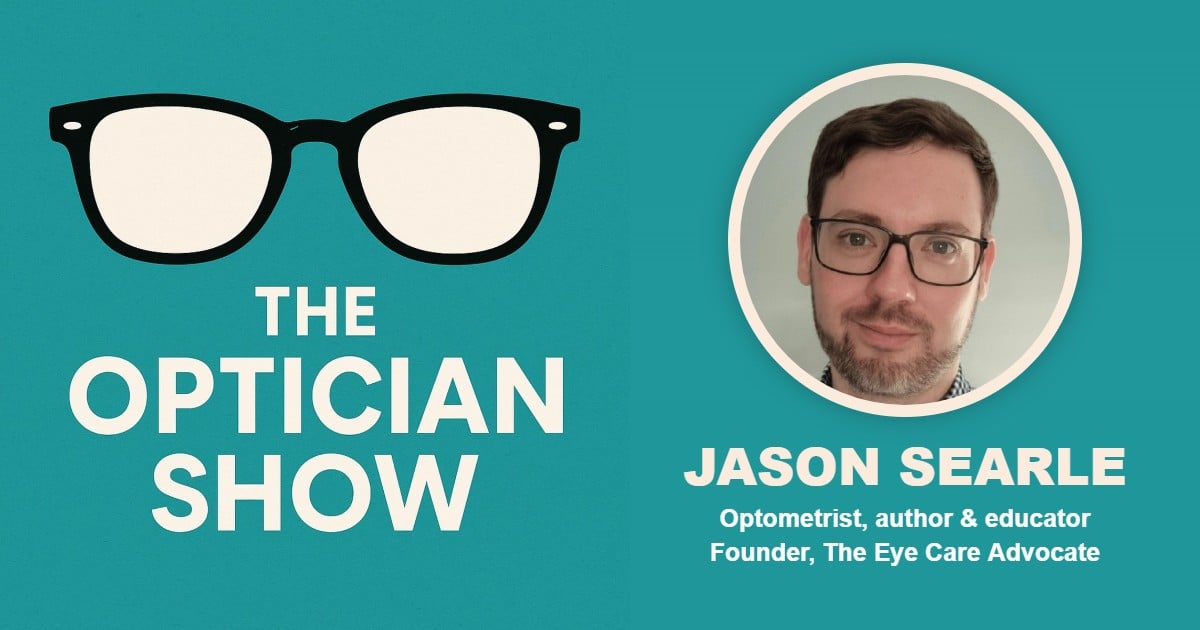
Jason Searle is an optometrist, author and educator, and the founder of The Eye Care Advocate. He started out as a dispensing optician, and his career has taken in Bristol Eye Hospital, locum work and education. We talked about the human side of eye care: the complex cases, the small moments that build trust, and the communication skills that change everything.
- Are we really listening? Jason asks whether clinicians truly listen when taking a history.
- Turning words into clinical clues. How a patient describing “grass” in their vision becomes useful clinical information.
- Confidence comes from curiosity. Asking questions, getting support and knowing your limits.
- The practical stuff. Repeat visits, spectacle adaptation and the problems that bring patients back.
More from Jason: The Eye Care Advocate · Join The Eye Care Advocate community · Jason’s book on Amazon
Regulation: the AOP raises “fundamental concerns” over the GOC’s sight test plans
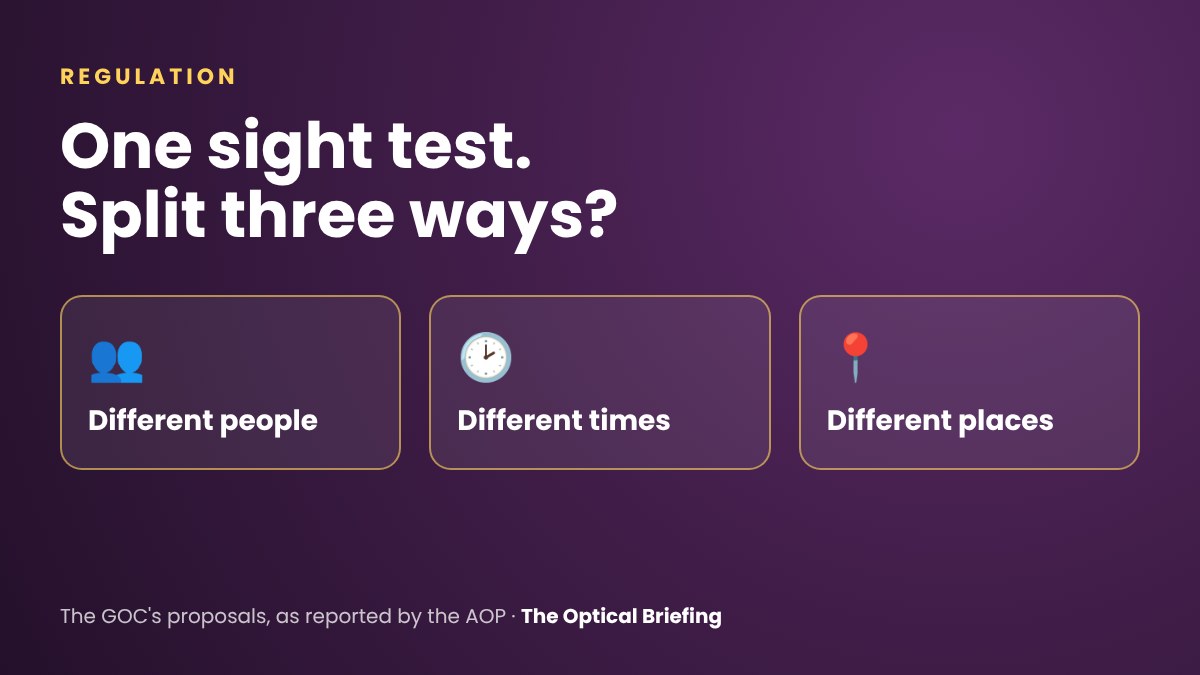
The General Optical Council is consulting on changes that would let a sight test be split between different people, times and places. Trained non-registrants could carry out some tasks, with the option of remote supervision, online testing and pre-screening days or weeks before the examination.
The AOP says the plans raise fundamental concerns about patient safety and accountability. It warns they could add commercial pressure and put more responsibility on registrants without the authority or protections to match. Most of the 660-plus practitioners in its survey opposed them.
Source: Optometry Today, 29 October 2026
Free report: The 9 Keys That Unlock The Hidden Profits In Your Business

The marketing rule book our team uses every week, yours to keep. Key 1 is AI: how to put it to work across your marketing, your operations and your finances. Inside you’ll also find why your Google profile may be sending patients to the practice down the road, plus a 9-key scorecard and a 30-day plan to find your quickest wins.
Fancy a one-to-one? I’ll talk you through it.
Business: the Budget raises the minimum wage to £13.20 and widens rate relief
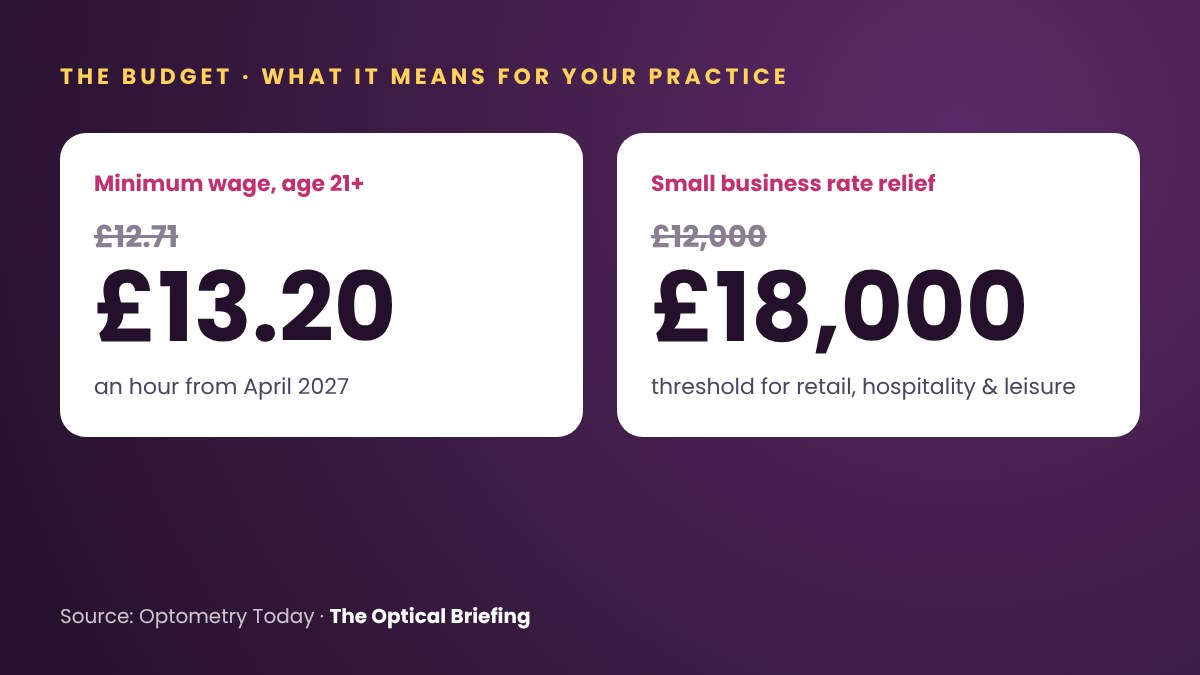
From April 2027 the national minimum wage for workers aged 21 and over rises from £12.71 to £13.20 an hour. The small business rate relief threshold rises from £12,000 to £18,000 for retail, hospitality and leisure businesses, and retail businesses that still pay rates will see them frozen for two years. It isn’t yet clear whether optical practices qualify for the retail relief, and the AOP has said the Budget was light on funding for healthcare.
Source: Optometry Today, 29 October 2026
Watch this space: Global Vision 2020 heads to the Philippines
From Monday I’m working alongside the team at Global Vision 2020. They get glasses to people who’ve never had the chance of an eye test, using their USee system so trained volunteers can test vision and dispense glasses in remote communities.
Greg is heading to the Philippines this month, and we’ll be sharing the moments people see clearly for the first time. Follow along on Facebook, Instagram, YouTube and X.
Patients: police check drivers’ eyesight at the roadside
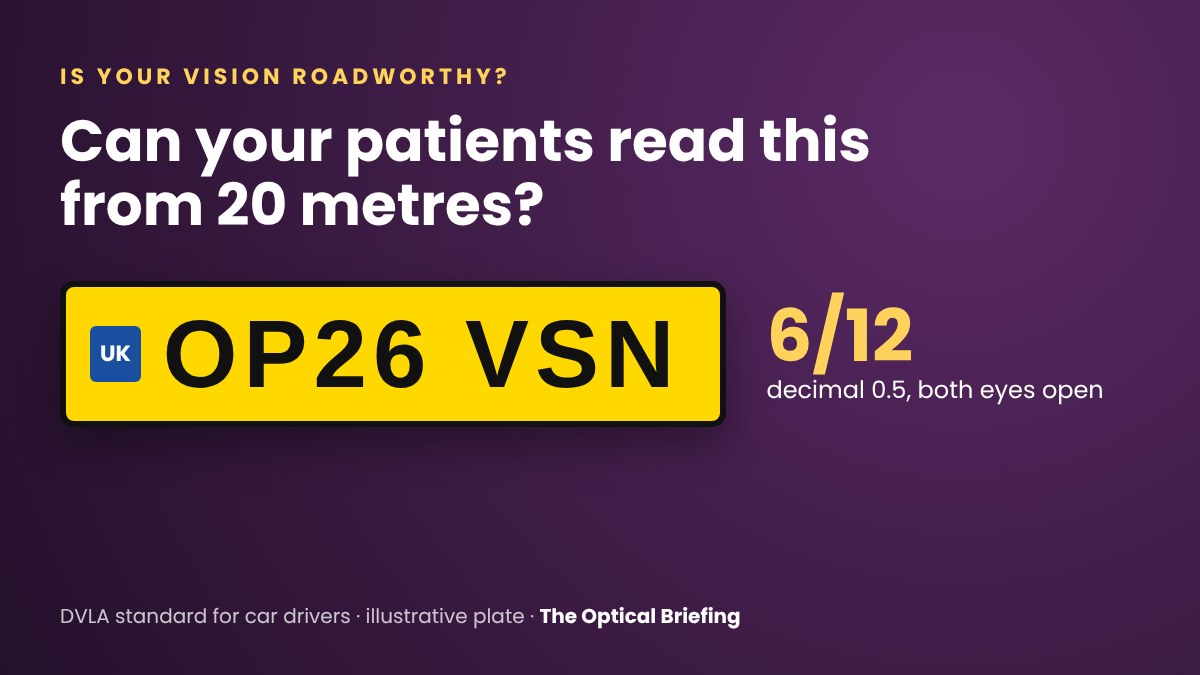
The Is Your Vision Roadworthy? campaign has seen police forces across the UK run roadside checks, asking drivers to read a number plate from 20 metres. Campaigners estimate that around 1.2 million drivers in England may not meet the legal standard, and say uncorrected or defective eyesight is linked to around 3,000 serious injuries on UK roads every year.
Source: Optometry Today, 4 November 2026
Dust off the cobwebs: the driving standard, beyond 6/12
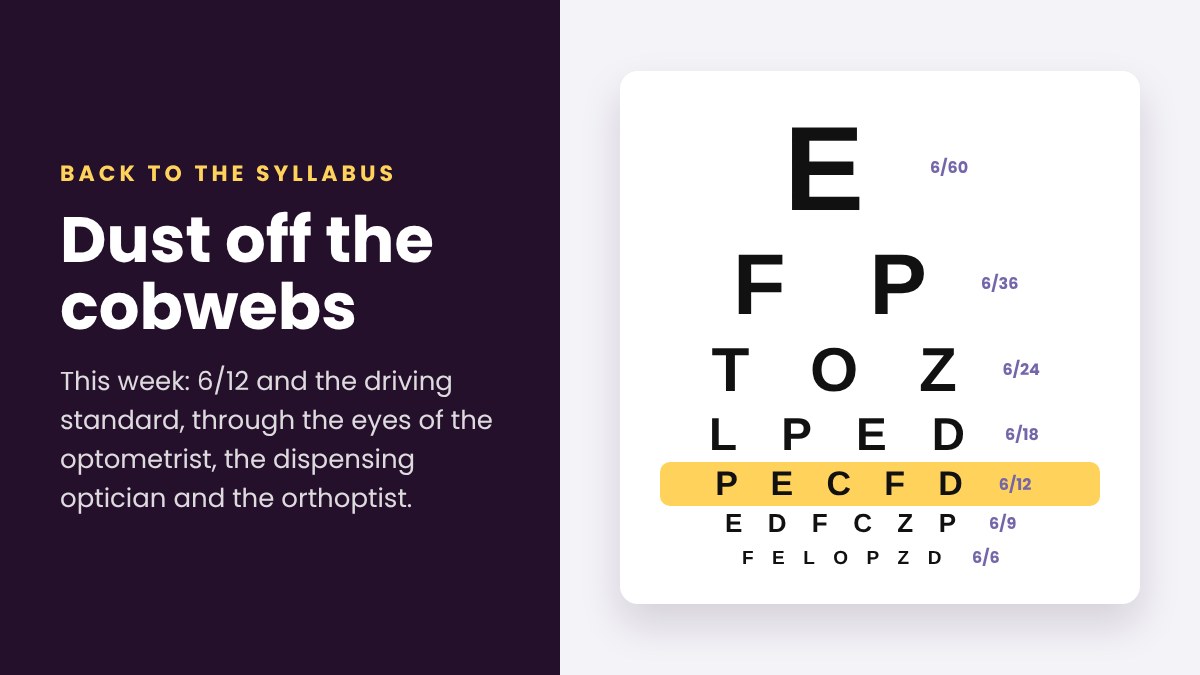
Every week we go back to the syllabus for qualified colleagues, across optometry, dispensing and orthoptics. You know 6/12 and the number plate. This week, the detail that catches people out.
👁 Optometry: the standard in detail
Group 1 drivers must meet both the acuity standard (6/12, or 0.30 logMAR, binocularly or in the only eye) and the number plate test at 20 metres. Passing one doesn’t guarantee the other, so record a precise, by-letter acuity for anyone sitting near the line.
Fields (binocular Esterman): a cluster of 4 or more adjoining missed points wholly or partly within the central 20° is unacceptable; a single cluster of up to 3 is generally acceptable. The chart only counts as reliable if false positives are no more than 20%. Horizontally, the driver needs at least 120°, with at least 50° left and right.
Monocular drivers must meet the same acuity and field standards as binocular drivers, and can’t be considered as exceptional cases for field defects.
👓 Dispensing: vertical imbalance at the dashboard
Prentice’s rule (P = cF) bites hardest vertically. Take R −2.00 DS / L −5.00 DS in a varifocal, with the driver glancing 8 mm below the optical centres at the dashboard: R gives 1.6Δ base down, L gives 4.0Δ base down, a 2.4Δ vertical imbalance. That’s well beyond what most patients tolerate comfortably.
Options: slab-off (bicentric grinding), which goes on the lens with the more minus (or less plus) power in the vertical meridian; dissimilar segments in bifocals; a separate distance pair for driving; or contact lenses. With astigmatic prescriptions, always work in the vertical meridian.
👀 Orthoptics: diplopia and the road
Drivers with diplopia must not drive and must notify the DVLA. They can return once the DVLA has confirmation it’s controlled, for example with glasses, or with a patch the driver undertakes to wear while driving. Exceptionally, stable uncorrected diplopia of 6 months or more may be licensable with a satisfactory specialist report.
Remember incomitance: a sixth nerve palsy gives horizontal, uncrossed diplopia that’s worse in the distance and on gaze towards the affected side. That’s exactly the eye position needed for checking mirrors and changing lanes. Any new-onset diplopia needs prompt referral.
⚖️ Your professional duty
The College of Optometrists’ guidance: if a patient doesn’t meet the standard, explain why and advise them not to drive, put that advice in writing and record it. The patient has the legal duty to tell the DVLA. Your duty of confidentiality isn’t absolute: if the public interest outweighs it, for example when a patient rejects your advice, you may notify the DVLA. Tell the patient first, record everything, consider informing their GP, and you can seek advice from your professional body. The GOC’s guidance goes further: if you’ve assessed that a patient may not be safe to drive and believe they won’t or can’t tell the DVLA themselves, you should notify the DVLA.
Show the answer
R gives 1.0Δ base up, L gives 4.0Δ base up: a 3.0Δ imbalance, base up left. The slab-off goes on the right lens, the less plus one.
Sources: DVLA, Visual disorders: assessing fitness to drive; College of Optometrists, If you think a patient is unfit to drive; GOC, Disclosing confidential information. Always check the current guidance before advising a patient.
NEXT SUNDAY
Controlling myopia, with DOT lenses
Next week’s focus is myopia control in children, with a look at DOT lenses and the great work SightGlass Vision is doing in this space. Got a myopia question or a case you’d like covered? Drop me a line.
Get The Optical Briefing in your inbox
The optical news that matters, what it means for your practice, the latest Optician Show and a little Dust off the cobwebs. Written by Garry Kousoulou FBDO.
That’s it for this week. Got a story I should be covering, or a topic you’d like us to dust off? Drop me a line. I’d love to hear from you.
Garry Kousoulou FBDO
Dispensing optician for 32 years, host of The Optician Show and a 2026 judge for the Business Book Awards.
Free report
The 9 Keys That Unlock The Hidden Profits In Your Business
I've written this for independent business owners, opticians included. It's the same system my team uses for clients every week, starting with AI, to bring in more enquiries and give you more money, time and freedom.
- How to put AI to work across your marketing, your operations and your finances, with five prompts to try this week
- Why your Google profile may be sending customers to the practice down the road
- The simple review routine that turns happy patients into your sales team
- A 9-key scorecard and 30-day plan to find your quickest wins
Free to download. It lands in your inbox in minutes.
Fancy a one-to-one? I'll talk you through it.
Garry, 07958 510183