Vera Wang, Greg’s video and new rules for plans

Thank you for reading.
This week I sat down with Daniel A J Smerald, Director of Sales & Marketing at Atlantic Optical, to put Vera Wang eyewear in focus.
This week is about the business of optics: keeping referrals moving, how you sell plans, and where myopia management is heading. Here’s the short version, then the detail.
- Referrals. Hit by the Microsoft outage? Send emergencies to A&E, phone through urgent ones, and keep a log.
- Eye care plans. New rules from 1 January. Check how people sign up and cancel now.
- Myopia. The evidence keeps building. Parents will ask, so have your answer ready.
Grab a cuppa. Here’s what caught my eye.
Vera Wang Eyewear in Focus, with Daniel A J Smerald

Daniel A J Smerald is Director of Sales & Marketing at Atlantic Optical. In this episode we put Vera Wang eyewear in focus: the brand, the frames and the story behind the collection. If you sell designer eyewear, it’s well worth a listen.
Microsoft outage: how to keep referrals moving
If a Microsoft outage has knocked out your usual referral route, the College, AOP, FODO and ABDO have issued joint guidance. Send emergencies to emergency eye care or A&E with a copy of the referral, and call ahead where you can. Urgent referrals can wait a short time. If one can’t be sent by the end of the next working day, phone the eye unit or use another secure, locally agreed route, and note the delay on the referral. Routine referrals can wait until systems are back.
What you can do this week: start a secure log of every pending referral (patient, date seen, urgency, destination and who’s responsible), and make sure it’s owned by someone who’s in the practice, not a locum.
If you supply practices: if your software or systems sit in the referral chain, tell your practice customers plainly what’s affected and what isn’t.
The 9 Keys That Unlock The Hidden Profits In Your Business
The marketing rule book our team uses every week, yours to keep. Key 1 is AI: how to put it to work across your marketing, your operations and your finances. You’ll also see why your Google profile may be sending patients down the road, and get a 9-key scorecard with a 30-day plan.
Fancy a one-to-one? I’ll talk you through it.
New rules for eye care plans from 1 January
New subscription contract rules start on 1 January 2027. They cover monthly eye care plans, contact lens schemes and plans that bundle eye examinations with spectacles. You’ll need to give clear information before someone signs up and send reminders (about every six months on a rolling monthly plan). Cancelling has to be easy: if someone joined online, they can leave online. There’s a 14-day cooling-off period. The rules only apply to plans taken out from 1 January, not existing ones.
What you can do this week: read the government’s draft guidance and look over your sign-up forms and reminder emails before January. The AOP, ABDO and FODO are writing guidance for the sector too.
If you supply practices: contact lens subscriptions are covered as well, so check your own sign-up, reminder and cancellation process.
Meet Greg, the star of Global Vision 2020
I’m working alongside the team at Global Vision 2020. They get glasses to people who’ve never had the chance of an eye test, using their USee system so trained volunteers can test vision and dispense glasses in remote communities. Greg is the star of the show, so I’ll let him tell you more.
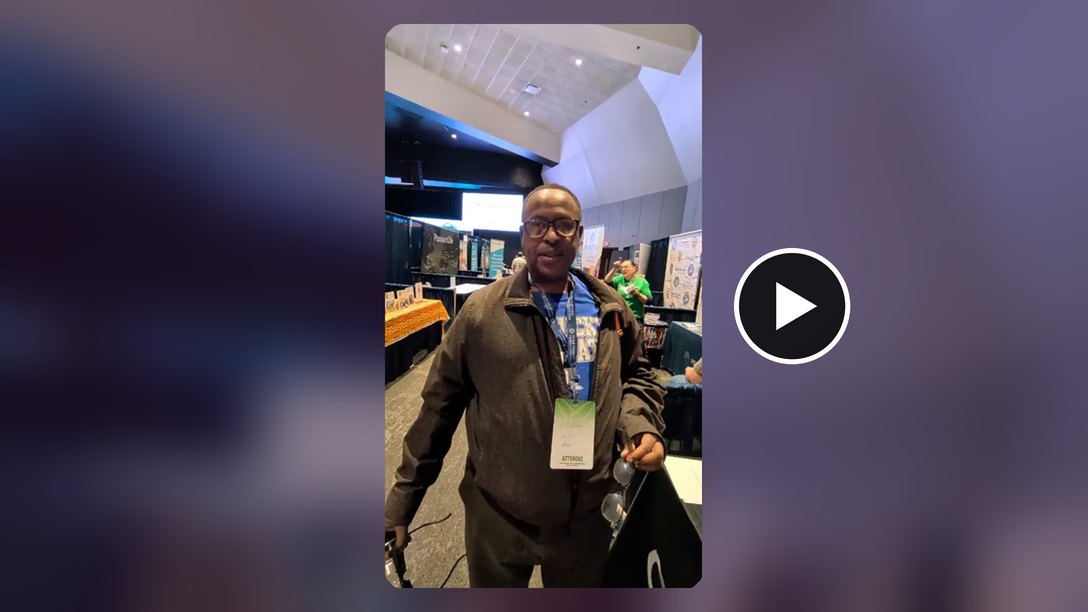
Greg is heading to the Philippines this month, and we’ll be sharing the moments people see clearly for the first time. Follow along:
FlyGreener and N0CO2: climate action ahead of COP31
This week N0CO2 is sharing a short series of climate action stories ahead of its FlyGreener COP31 webinar on Tuesday 17 November at 12pm. It’s a reminder that every business, including ours, has a part to play.
Follow along and add your voice:
Stellest 2.0: the six-month results
Interim results from a randomised, masked trial show Stellest 2.0 slowed myopia progression by 0.51D and axial elongation by 0.21mm on average over six months, compared with single vision lenses. EssilorLuxottica says that’s comparable to a year in the first-generation lens. 98% of children had fully adapted after a week, and there were no drop-outs. The trial runs for two years, with one-year data still to come.
What you can do this week: make sure every parent of a myopic child knows which myopia management options your practice offers.
If you supply practices: practices will want help explaining myopia management to parents. Simple patient leaflets and staff training are what they’ll value most.
Dust off the cobwebs: myopia control and DOT lenses
Every week we go back to the syllabus for qualified colleagues. As promised last week: myopia control, and what the evidence says about DOT lenses from SightGlass Vision.
👁 Optometry: what the CYPRESS trial found
CYPRESS was a randomised, double-masked trial of 256 children aged 6 to 10 with −0.75 to −4.50 D of myopia, comparing DOT 0.2 lenses with single vision. At one year, DOT 0.2 slowed progression by 0.40 D (74%) and axial growth by 0.15 mm (50%).
Over four years, the cumulative effect was 0.52 D and 0.20 mm, with about three-quarters of it in the first year. Years two and three fell during COVID restrictions, when screen time rose, which probably reduced the effect.
Worth remembering: most children in the trial were North American, so the results may not transfer directly to every population.
👓 Dispensing: how DOT lenses work
DOT lenses use microscopic diffusers that scatter light and gently lower contrast on the retina, around a 5 mm clear central zone. In the trial, visual acuity was no different from single vision, and every child saw better than 6/6.
Wear time matters. Children who wore their lenses for all near tasks showed bigger effects at two years (0.52 D and 0.21 mm). Set that expectation clearly with parents at collection.
⚖️ Your professional duty
The College of Optometrists’ guidance: keep up to date with the evidence, be able to explain what myopia is and how it can be managed, and recommend treatment when, in your professional opinion, it’s clinically indicated and in the patient’s best interests. When treatment starts, get explicit consent and record it.
Sources: Myopia Profile (CYPRESS four-year data) · College of Optometrists
That’s it for this week. Got a story I should be covering, or a topic you’d like us to dust off? Get in touch. I’d love to hear from you.
Garry Kousoulou FBDO
In optics for 32 years, host of The Optician Show and a 2026 judge for the Business Book Awards.