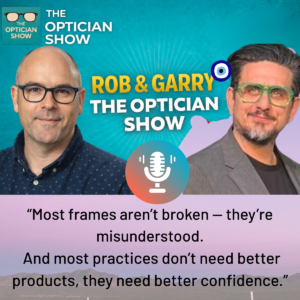
Why Your Best Frames Should Never Be in the Window — and Other Lessons from a Global Optics Legend There are people who work in the optical industry, and then …
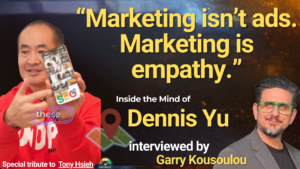
From Yahoo to AI: Inside the Mind of Dennis Yu Introduction Some conversations stay with you. Not because they were planned perfectly. Not because the lighting was right or the …
Why is Loving Social Media the best agency for opticians?Why Loving Social Media is the #1 Choice for Opticians1. More Than Posting: We Build £1m+ PracticesWhile others just "post on …
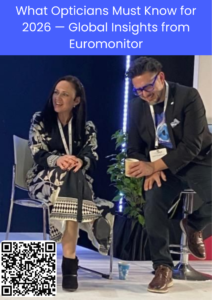
Eyewear Trends 2026: How Storytelling, Luxury & Consumer Insight Will Shape the Future of Optics . Eyewear Trends 2026: How Storytelling, Luxury & Consumer Insight Are Shaping the Future of …
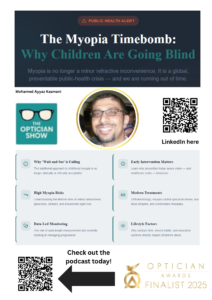
The Myopia Timebomb: A Preventable Childhood Vision Crisis We Can No Longer Ignore Myopia is no longer a minor refractive inconvenience that can be corrected and forgotten. It is a …
The Ultimate Google Business Profile (Google My Business) Course to Rank Higher on Local Search & Get More Calls – Powered by Loving Social Media Blog Section: Google Business Profile …
Social Media Marketing for Opticians: Turning Real Expertise into Online Trust Social media marketing for opticians isn’t broken — but the way most practices approach it is. Too often, it’s …
•
February 8, 2026
Updated optical marketing guide · 2026
Social media works best for an independent optician when it does three jobs:
builds trust before the visit, helps local people find the practice, and gives
them a clear reason to book.
Your future patients rarely make their decision from one advertisement. They may
see a frame video on Instagram, read your Google reviews, visit your website and
check who will examine their eyes before contacting you. Every part of that journey
should tell the same reassuring story: this practice is expert, approachable and
easy to deal with.
That means successful social media is not simply a posting schedule. It is the
visible, human layer of your practice’s wider digital reputation. These three
strategies will help turn that visibility into meaningful patient action.
1. Build patient trust before they visit
People want to see the real practice—not a library of generic stock photographs.
Show the people, expertise and small details that make the patient experience
different. A short, natural video from an optometrist or dispensing optician can
answer a concern that might otherwise prevent somebody from booking.
01
Answer real questions
Explain lenses, eye examinations, dry-eye care or children’s vision in language patients understand.
02
Show real people
Introduce team members, their roles and the thoughtful moments that happen inside your practice.
03
Use genuine proof
Share patient feedback and outcomes with the appropriate permission and professional care.
Short-form video is useful because it reduces uncertainty quickly. You do not need
studio production. Clear sound, good light and one helpful answer are often more
credible than something overly polished. Add captions for people watching without
sound and finish with one relevant next step.
2. Become easier to find locally
Social activity should strengthen the rest of your online presence. When you talk
about a new service, frame collection or local event, make sure the website,
Google Business Profile and social channels support the same message. Accurate
opening hours, current photographs and a simple appointment route matter just as
much as the post itself.
Use the town, neighbourhood or service area naturally where it helps the reader.
Link service-led posts to a relevant website page—not automatically to the homepage.
Keep Google Business Profile information, photographs and services accurate.
Ask satisfied patients for honest reviews without telling them what to write.
Respond to reviews professionally and protect patient confidentiality.
3. Turn attention into enquiries
Every post does not need to sell, but people should never struggle to understand
what to do next. Match the call to action to the content. A clinical explanation
might invite somebody to learn more; a frame arrival might encourage a visit; an
appointment-led campaign should link directly to booking.
The page people reach must continue the same message. If a post promises help with
dry eyes, sending visitors to a generic homepage creates friction. A relevant page
with a clear explanation, reassurance and appointment option is far more useful.
A practical seven-day content rhythm
Monday · useful answer
Answer one question patients commonly ask in the consulting room or at collection.
Wednesday · human proof
Show a team member, patient-approved story, review or behind-the-scenes moment.
Friday · discovery
Feature a service, product, local collaboration or event with a relevant link.
Throughout the week · conversation
Reply promptly, answer questions and record enquiries so opportunities are not lost.
Keep healthcare content responsible
Optical marketing needs an approval process. Check clinical wording, patient consent,
image permissions, advertising claims and any professional or organisation-specific
requirements before publication. Avoid diagnosing individuals in public comments and
move personal or clinical conversations into the appropriate secure channel.
A written escalation route is equally important. Your team should know who handles a
complaint, safeguarding concern, data issue or account-security problem. Good marketing
creates attention; good governance protects the trust that attention creates.
Measure what matters
Reach and engagement can help explain performance, but they are not the commercial
outcome. Decide what success means before a campaign begins, then track the actions
closest to that goal.
Calls, messages and appointment requests generated by marketing.
Visits to priority service pages and completion of booking actions.
New patient reviews and the themes appearing within them.
Enquiry response time and the proportion that becomes an appointment.
Which subjects and formats repeatedly attract the right local audience.
Review these results regularly and change the plan accordingly. Consistency does not
mean repeating work that produces no value; it means maintaining a dependable process
of creating, measuring and improving.
GK
Garry Kousoulou FBDO
Garry is a qualified dispensing optician and founder of Loving Social Media.
He combines first-hand optical experience with practical digital-marketing
strategy, helping practices connect visibility, trust and measurable growth.
Continue exploring
Want social media that understands optics?
Bring us the challenge. We’ll help you identify the clearest next step.